
.jpg?height=200&name=iStock-1337381675%20(1).jpg)
The increasing demand for assessment of Nicotine pouches
GTNF 2026: A Sea Change in the Regulation of Reduced-Risk Nicotine Products?
Nicotine
Sep 18, 2026 | Published by Broughton
Nicotine
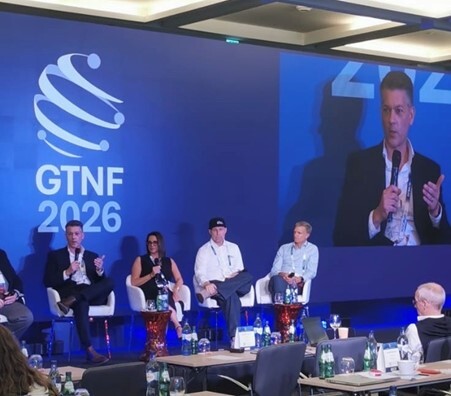
Throughout this year’s Global Tobacco and Nicotine Forum (GTNF) consistent themes emerged. The need for proportionate regulation and the effective communication was paramount. Despite the growing scientific evidence, many governments are not willing to acknowledge the benefits of reduced-risk products and the damage caused through prohibition or highly stringent regulations. However, there are some glimmers of hope and early signs that a regulatory shift is happening.
Time and again across three days of engaging and future-focussed debate, the importance of understanding, accepting and responding to the science came to the fore. One of the most eagerly anticipated sessions was delivered at the end of the event by newly appointed CTP director Bret Koplow marking a renewed commitment to open communication and cautious optimism. It is also clear that, despite the significance of the actions and outcomes in the US market, dispelling the misconceptions of nicotine, addressing the challenges of the illicit market and providing consumers with safe and effective smoking cessation products are global objectives.
Beth Oliva, Partner, Fox Rothschild LLP opened the forum with a poignant message that tobacco use still causes more than eight million avoidable deaths each year, while global policy remains deeply divided. She ended her opening remarks highlighting GTNF’s growing role in bringing the industry together to engage, align and drive change.
Global supply chains
The first panel, moderated by Laura Leigh Oyler of Haypp Group, brought together Rahul Sebas Mathew of Leaf and Beyond, Ross Kirsh of Dymapak and Przemysław P. of Chemnovatic, to examine supply-chain challenges. Rahul explained that suppliers must meet different expectations across markets, from EU deforestation rules and UK modern-slavery requirements to US forced-labour controls, while maintaining visibility over every material.
Ross argued that regulation, rather than logistics, is now the greatest supply-chain risk. Packaging requires extensive evidence, including laboratory approvals, composition data, recyclability assessments, contact-safety evidence and, in Europe, declarations of conformity supported by technical files. In effect, companies must qualify not only the product but the entire paper trail.
The discussion emphasised agility. Standards are valuable as long as they don’t stifle innovation. Przemysław advised building supply alternatives before they are needed; Ross’s message was equally clear: do not try to predict every disruption, be ready for it.
Regulation, innovation and risk
The next panel, moderated by STRYK Brands, Inc. Christopher Greer, continued the supply-chain theme. Chris Gemmell, Chief Product & Innovation Officer, Greentank Technologies, stressed that varied national regulations mean that a universal supply platform does not exist. Panellists also warned that restrictions can prevent accurate information reaching adult smokers, leaving continued smoking as the simplest choice despite the availability of scientifically substantiated, lower-risk alternatives.
In his keynote, Kingsley Wheaton of BAT argued that old technologies are displaced by better alternatives, not debated out of existence. Innovation need not be perfect; it must be meaningfully better than what it replaces. He also challenged the collapse of “smoking is dangerous” into “tobacco is dangerous” and then “nicotine is dangerous,” which overlooks combustion as the principal source of harm. “Safe” is absolute, while “safer” is comparative; for roughly 1.1 billion adults who smoke and may not quit, the essential question is “compared with what?”
The afternoon turned to climate policy. A panel moderated by Benjamin Dessart, Vice President of External Affairs, Universal Corporation and joined by Miranda McDaniel Kinney, Senior Vice President, Global Head of Corporate Affairs & Impact, Pyxus, Tadas Lisauskas, President and Co-founder, Greenbutts and Aylen Van Isseldyk, Founder & Director, THR, Ethics and Sustainability considered cigarette butts, a major source of plastic waste, and whether biodegradable alternatives should be driven by regulation or consumer choice. Tadas Lisauskas noted that informed consumer choice is difficult while communication with consumers remains restricted.
Day 1 closed with Marina Murphy of Haypp Group examining big data and the rapid growth of nicotine pouches, which has increased more than sevenfold since 2022. Evidence indicates an improved safety profile compared with cigarettes and a role in helping adults switch. Sweden’s long-term snus use has coincided with the EU’s lowest smoking-related disease levels. Modern oral nicotine pouches now outsell snus in Sweden and Denmark, driven largely by women, suggesting broader adoption could accelerate Sweden’s progress towards becoming smoke-free and deliver substantial public-health benefits.
Day 2 opened with WOW Solutions’ Lillian Ortega examining illicit trade in the US. Unauthorised products account for around 70% of retail sales and the true figure may be higher because online and specialist vape shops are excluded. With only 45 authorised SKUs, largely tobacco and menthol, regulated products are failing to meet consumer demand. This creates a self-reinforcing cycle: illicit operators fill the gap, policymakers respond to their visible dominance, and new restrictions fall mainly on compliant businesses. Lillian recommended authorising viable products, making PMTA reviews timely and predictable, improving supply-chain visibility, and coordinating targeted federal and state enforcement.
The contrasting experiences of New Zealand and Australia followed. David Hooker, Executive Director, New Zealand Association of Convenience Stores, described how workplace restrictions, smoke-free hospitality, packaging warnings and constructive engagement between industry and government have helped reduce smoking in New Zealand. After a change of government, proposals that would have heavily restricted nicotine products were dropped. Vaping overtook smoking in 2022; daily smoking is now 6.8%, while 89.4% of 14- and 15-year-olds have never smoked.
Theo Foukkare, CEO, Australian Association of Convenience Stores, described the situation in Australia where, despite well-intended prohibition-led policies, the illicit nicotine market is now worth more to organised crime than the five largest illicit drug markets combined and has been linked to serious crimes including firebombings and even murders. Retailers have lost $3bn in legal tobacco sales over five years, while federal excise losses have reached $10bn annually. Eight in ten adult tobacco buyers use illegal products, rising to almost ten in ten for vapes and pouches. Although more than 1,000 illegal stores have closed and over $500m has been committed to enforcement, Theo argued that enforcement alone is insufficient. A proposal from the main opposition party would cut excise by 80%, regulate adult access to vapes and pouches, and support this with public-health communication.
The first session of the afternoon focused on innovation. Moderated by Eve Wang, Executive Director, Smoore International, panellists from BAT, ITG and Hangsen International delivered a unified message that legal and regulatory expertise must be involved from the beginning. A desirable product has no investment case without a route to market, while external partnerships can accelerate development. The speakers also cautioned that poorly designed standards can suppress innovation and expand illicit trade.
The next panel comprised Ronan Barry, Chief Legal & Corporate Affairs Officer, AIR, Fredrik Laurell, CEO, Nicoccino, Martin Miller, Chief Commercial Officer, IKE, Ryan Selby, Managing Director, Emerald Innovations and was moderated by Emplicure’s Anna Franzén. Ronan highlighted an enforcement imbalance: the appetite to regulate exceeds the capacity to enforce, sometimes making compliance more costly than non-compliance. They also stressed continuing public confusion between nicotine and tobacco, reinforcing the need for accurate risk communication.
The final panel of the Innovation 360 sessions: Supporting Industry hosted by Sarah Marking from Sanova was attended by panellists from Salim-Sartoni Associates, Tamarind Intelligence, EAS Consulting, The Snus Brothers Distribution and our very own CEO, Chris Allen. The conclusion here was that a viable product must satisfy consumers, regulators, manufacturers and the business simultaneously. Bringing all four perspectives into development early helps expose failure points before major investment and so companies are most at risk when fear causes paralysis or speed causes problems to be discovered too late.
One of the highlights of the entire event was a passionate and enthralling panel on the final day, addressing the issue of the European TPD.
Moderator Sud Patwardhan, Co-Founder, Centre for Health Research and Education was joined by Libby Clarke, Imperial Brands, Konstantinos Farsalinos, School of Public Health at the Universities of Patras and West Attica, Peter Beckett, Three Six One and Nathalie Darge, Tobacco Europe examined whether evidence shapes European tobacco policy or vice versa. Nathalie explained that the TPD3 consultation has closed, an impact assessment is underway, and a draft proposal is expected by the end of 2026. Adoption could follow in 2028, with implementation by 2030.
There was broad agreement across all the panellists that science is being sidelined. Konstantinos highlighted the fact that the consultation received a staggering 82,000 submissions; around 60% of academic and research institutions supported harm reduction and more flexible regulation, compared with 13% opposed. There is clearly overwhelming support for harm reduction and more flexible regulation, which is the exact contrary to what the EU is trying to achieve and to implement. Libby criticised the evaluation evidence base, including a non-systematic JRC review using 47 references, only eight peer reviewed, while omitting the Cochrane review. She also noted that regulators assess the risks of allowing alternative products but not the consequences of restricting access. And Peter Beckett was forthright in his assertion that science does not appear to influence legislation within the EU. He pointed to snus, banned since the 1980s and never overturned despite the evidence from Sweden, and to the Commission's target quietly changing from reducing smoking to reducing smoking and nicotine.
Sweden remained a powerful example: smoking rates are around 5%, and smoking-related cancer deaths are much lower, yet combined reporting of tobacco and nicotine use can obscure that success.
The panel nevertheless remained positive, Konstantinos set out three pillars: generate the data ourselves, communicate it properly, and use existing accountability mechanisms. Change is coming, potentially including a US-style premarket application system, and sustained evidence-led engagement will be essential.
Clive Bates, Director of Counterfactual, delivered a forthright set of closing remarks covering a range of topical issues. He touched on the continuing need for innovation to create safer and more user-friendly products whilst supporting the overall drive for sustainability. Highlighting the recurrent theme that bad regulation or prohibition can drive illicit markets he spoke in support of good regulation as a key mechanism to control harm through delivering education and implementing controls whilst still providing adults with the choice that they need.
He ended his session addressing the impact of new competitors entering the market and the potential for profitability in the industry to be impacted. His final thoughts, that the main competitive challenge for the market is not individual tobacco companies but rather the scientists and lobbyists spreading misinformation was a perfect segue to the session delivered by FDA’s new permanent Director of the Center for Tobacco Products, Bret Koplow.
In his closing keynote, Bret outlined three priorities: preventing youth initiation, helping adults stop smoking or switch to lower-risk products, and ensuring consumers and clinicians understand the continuum of risk.
He highlighted the misperception shared by many that the share of US adults who recognise that FDA-authorised e-cigarettes are generally less harmful than cigarettes fell from around 51% in 2012 to under 17% in 2022. Earlier actions by FDA were based on the evidence available at the time, but the misperceptions created are still doing damage. While complete cessation remains the best outcome, FDA recognize that this isn’t always possible and are more open to use the term Tobacco Harm Reduction, recognizing the continuum of risk and the need for clearer communication regarding this.
Bret went on to state that public health benefits depend on more authorised products reaching the market. Over 99% of applications have lacked basic evidence, including pharmacokinetic data, aerosol characterisation and manufacturing consistency. FDA also accepts it must better explain its requirements. Encouragingly, the backlog is down 70%, acceptance review takes one to three weeks and filing review around 21 days.
Tackling the illicit market is also critical as none of the benefit of authorised products are felt whilst the market remains flooded with illicit products. The direction of travel looks positive as import refusals have gone from around 100 in FY2023 to over 9,000 in FY2025. As Dr Koplow put it, this is not just a compliance problem, it is a public health problem and a fairness problem for companies doing it properly.
The pathway will not be easy, and FDA still expects strong scientific evidence for an APPH determination. However, it is becoming clearer and faster. We are seeing positive change led by someone who appears to understand the real problem.
GTNF 2026 was fascinating and thought-provoking, and we are already looking ahead to the event in 2027.